Badlands, you gotta live it everyday
Let the broken hearts stand
As the price you've gotta pay
Keep pushin' 'til it's understood
These badlands start treating us good
-Bruce Springsteen, “Badlands”
April 28, 1875 - 7:00 am - Outskirts of Dusthaven
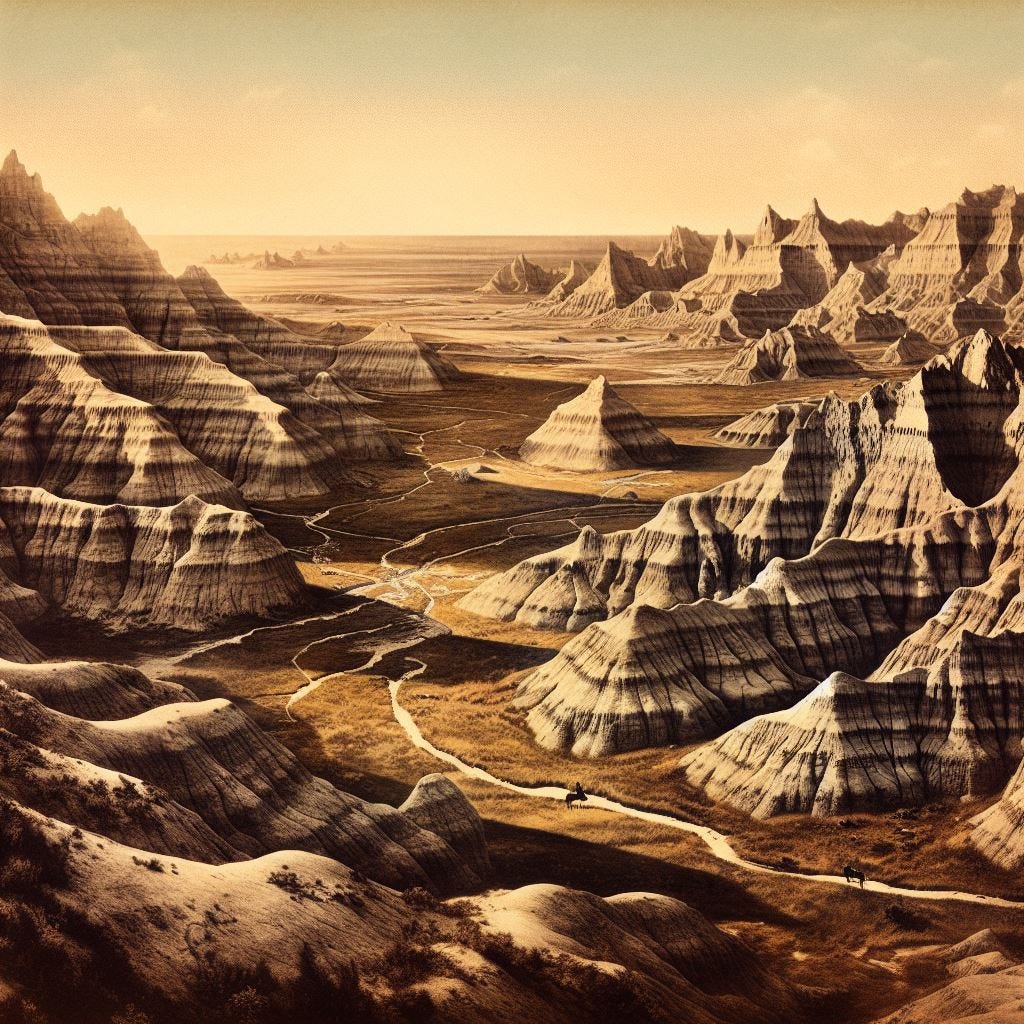
The weather was favorable, if slightly cold. The badlands surrounding Dusthaven presented a harsh and desolate landscape, shaped by the relentless forces of nature. The terrain was rugged and unforgiving, with jagged rock formations and steep canyons that rose abruptly from the desert floor. These rocky outcrops, weathered by centuries of wind and rain, were stained in hues of red, orange, and brown, creating a striking contrast against the clear blue sky.
The sparse vegetation was a testament to the area's ability to sustain life despite the harsh environment. Hardy cacti, scrub brush, and sagebrush dotted the otherwise barren landscape. Occasional Joshua trees and twisted junipers added a bit of greenery to the expansive desert, the sight of which was a welcome relief to the dryness.
The sun shone mercilessly, and the cracked, parched ground was a testament to its relentless heat. Dust devils danced across the open plains, churning up clouds of powdery dust that settled over everything, giving Dusthaven its appropriate name.
The wildlife in the badlands was elusive and wary. Rattlesnakes slithered among the rocks, their distinctive rattles warning of their presence. Coyotes roamed the outskirts, their mournful howls echoing through the canyons. Birds of prey, such as hawks and eagles, soared high above, scanning the ground for any signs of movement.
The moment Cole reached the badlands, he remembered what Reverend Elias had said. looking out at the country he could understand why the Reverent was so afraid. This place was only too easily imagined as hiding something evil.
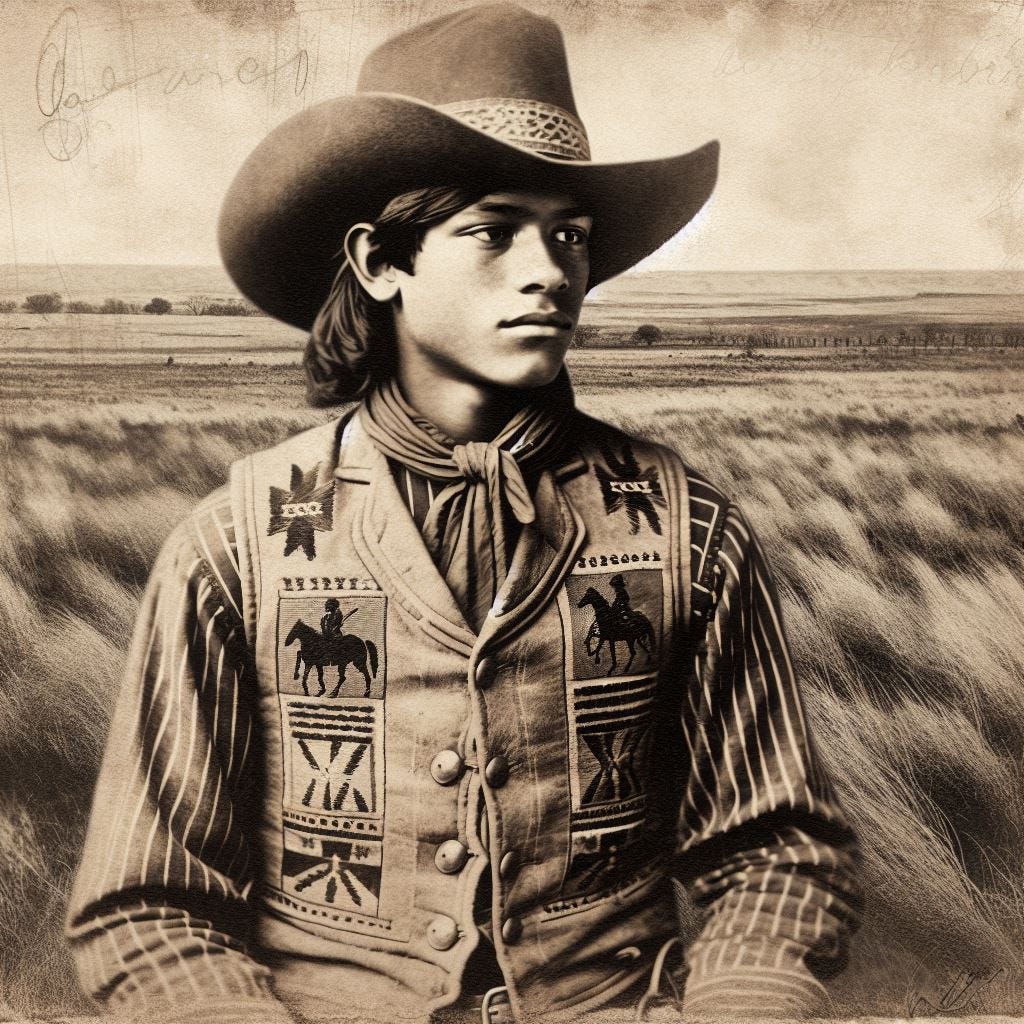
When Cole neared their arranged meeting spot, he found Owley waiting for him, along with a young Indian man. The Indian was dressed in typical cowboy clothing, though he wore his hair long under his wide-brimmed hat. He also wore an Indian necklace that Cole did not understand the meaning of. He was armed with a Peacemaker, a carbine, and a large Bowie knife.
“Ah, Bridgewater. There you are at last.” Owley said. “This is White Feather, the best scout and tracker in these parts.”
The Indian tipped his hat to Cole. “My name is Tawakoni,” he said in perfect English. “Mr. Owley only calls me White Feather because he says he can’t say Tawakoni. His money’s good so I don’t object too much.”
“Ta-wa-koni,” Cole tried out the name for himself. “Doesn’t seem too hard.” The Indian seemed satisfied either way, and moved to the next topic of conversation.
“I’m from the Comanche tribe,” he said. “I’ll tell you right now that the Apache don’t get along very well with my people. It’s never been good, but they blame us for several of their people going missing lately. I don’t know if the Comanche actually have anything to do with that, but they blame us. I’ll try not to get in the way of your negotiations, but they aren’t likely to be friendly.”
Tawakoni walked as he spoke toward three horses that were tethered nearby. Cole looked them over, but he was a poor judge of horse quality. Tawakoni patted a gray mare. “This is Nevah,” he says. “She’s good with new riders and real reliable. She’ll carry you on this trip, Mr. Bridgewater.” The horse snorted when he patted her, but did not otherwise react.
Cole settled himself into the saddle. It had been a while since he had ridden, but Nevah didn’t seem uncomfortable with him on her back. Once in the saddle, he looked around again. The only other people in sight were miners going to work, and only rattlesnakes and jackrabbits paid them any attention. Tawakoni started them down the dusty desert trail, humming atonally to his own mount.
As they continued down the trail, Cole pulled his Nevah next to Tawakoni, and asked if he had heard or seen anything strange in the badlands. The young Indian snorted. “Define strange,” he said. “Ain’t anything you’d likely call normal out here.”
“That preacher in town told me all manner of odd stories about some kind of devil out here in the canyons,” Cole said. “He thought it might have to do with all these people going missing lately.”
Tawakoni paused to spit out the juice from his chewing tobacco. “Well, I’ve never seen one myself, but the old Comanches had lots of stories,” he said thoughtfully. “They called it Yipeha, said it came at night and took people that left the tipi after dark. That was just a story, though. I got no idea what happened to those folks around here.” Cole looked around furtively, but saw nothing unusual watching them.
8:00 am - The Badlands
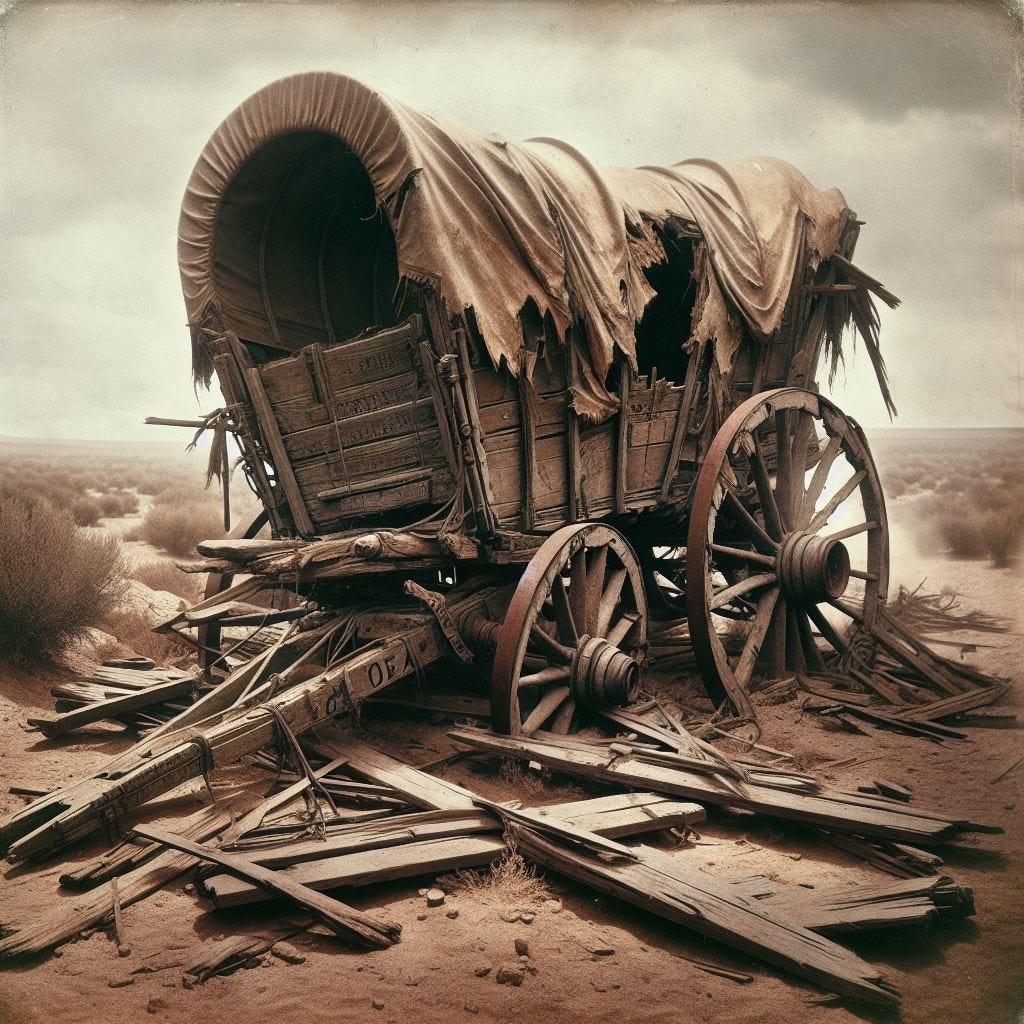
The group had ridden down the trail for about an hour when they saw a dark shape in the middle of the road. As they rode closer, they could see that it was a buckboard wagon, with “U.S. Army” stamped on the side. The buckboard looked in very bad shape. The horses were gone, and it looked like something had been broken out of the bed of the wagon as well.
An eerie moan echoed across the desert, and Owley started reciting “The Lord is my shepherd, I shall not want..” and looked like he was about to bolt. Tawakoni frowned, and dismounted his horse to look under the wagon, where he found a man in a tattered Army uniform. “Water,” the man cried weakly. “Water.”
Cole gasped involuntarily when Tawakoni pulled the man from beneath the wagon - it looked as though his arms and legs had been deliberately crippled with some sort of sharp instrument and left to bleed to death. The mere fact he was still alive said that this had happened recently, and that whoever did it might still be around.
Tawakoni gave the man some water from his canteen, and examined his wounds, a confused look on his face. “Sir,” he said, “Who did this to you?”
“Was it Indians?” asked Owley, looking a big nervous at the prospect.
“Not Comanche, Apache, or Navajo for sure. I never knew any tribe that treated prisoners like this.” Tawakoni took some salve in a container from his belt, and began to apply it to the man’s wounds.
“Spirits?” asked Owley. It didn’t appear that this comforted him any more than the prospects of Indians did. “I heard you two talking.”
“Wasn’t Indians, or spooks neither.” The wounded soldier spoke weakly. “It was white men, and they had a lot of people with them. Makin’ ‘em walk at gunpoint out into the desert.” He gasped in pain. “The head man, he done this to me. Said it would be an interesting experiment to see if I lived.”
“I think he will live,” said Tawakoni. “But only if I take him back to the doctor in town.” Owley seemed to consider this for a moment, then he nodded in agreement. “I don’t think you tenderfeet can reach the Apaches without me to guide you. I suggest you stay put until I get back.”
Owley looked out at the badlands beyond the wagon and said, “Trust me. We’re not going anywhere.” Cole didn’t say anything in response, but he did wonder if they would ever see their guide again. After all, the twisted people that they harbored out here could be anyone, including Tawakoni himself.
They waited until well past noon for the guide to return. While they waited, they poked around in the wagon but it looked like the people who had tortured the soldier had also taken everything of value with them. Cole wasn’t sure what the Army would be hauling around out here, but if it was now in the hands of outlaws it couldn’t be a good thing.
After the wagon was searched, they were left with nothing but its empty shell and the eerily silent desert around them. To pass the time, Cole asked Owley if he liked working for the railroad.
"The railroad is great," said Owley. "I never had anything until I started working for them. The pay is good, and there's always work. I've never seen a worker who didn't work for more than a week, and they were never fired. There are rumors that they get a nice pension when they retire, but that's just speculation. The railroad is always looking for more laborers, and the job isn't particularly difficult. They've made it so any ordinary person can join up, no matter their education or experience. The pay is certainly a lot better than any other option, and it keeps you in food and shelter.
“Have you ever had to remove Indians from railroad land before?” Cole thought about the papers in his saddlebag.
“Good heavens, no,” said Owley, although Cole wasn’t sure he believed him. “And don’t go mentioning any of this to White Feather. He might not like the Apaches but he’s still an Injun, and closer to them than he is to us. Heaven knows what he’d do.” Cole chewed on this thought for a while as he watched the shadows grow longer. He wasn’t sure which of his companions to trust in this godforsaken piece of desert. Was there anyone?